While some experts call for the Obama administration and the Federal Reserve to take more steps to boost the sagging economy, others worry that activist government policy would backfire.
The concern focuses on moral hazard. That’s the idea that government intervention to save the economy would encourage risky behavior by financial institutions and investors feeling confident that the government would bail them out of any crisis.
The Wall Street Journal asked former Federal Reserve Chairman Alan Greenspan if activist government policy can produce moral hazard.
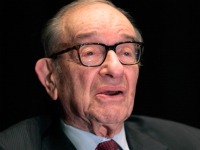 |
Alan Greenspan
(Getty Images photo) |
"Oh, I think so," he said. He mentioned “too big to fail” as an example, although he declined to comment on current monetary policy.
Looking back at his own tenure as Fed chairman (1987-2006), he said, "There were unintended consequences to almost every action I was involved in."
Many economists say some of the Fed’s easing moves during Greenspan’s reign helped fuel the stock bubble of the 1990s and the credit bubble of the next decade.
"If we anticipated the unintended consequences that were going to happen, we might have changed the policy," he said. But that anticipation is quite difficult, Greenspan noted.
There is some disagreement on the Fed now about whether it should ease monetary policy further. Chicago Fed President Charles Evans tells CNBC that a more aggressive policy may be necessary.
“Strong accommodation needs to be in place for a substantial period of time," he says.
© 2026 Newsmax Finance. All rights reserved.