Government spending and other programs are the only tools available to spark demand and get the economy going again and those who argue for less government are concocting a recipe for less economic growth, says economist Robert Reich.
"The only way out of this vicious cycle is for the government – the spender of last resort – to boost the economy. The regressives are all calling for the opposite," Reich wrote in his blog.
"Even if you’re a deficit hawk, this is nuts. Instead of reducing the ratio of debt to the economy, this strategy increases it because it will cause the economy to shrink,” wrote Reich, who served in three national administrations and was a secretary of labor under President Bill Clinton.
__________________________________________________________
The ‘Unthinkable’ Could Happen — Wall Street Journal
Over one million Americans have heard the evidence for 50% unemployment, 90% stock market crash, and 100% inflation. Be prepared. Watch the Aftershock Survival Summit Now, See the Evidence.
__________________________________________________________
“Under these circumstances, the harder you work to cut the debt, the worse the ratio becomes because the economy shrinks even faster," Reich adds.
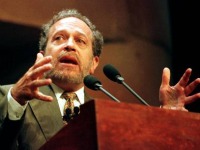 |
Robert Reich
(Associated Press photo) |
"Call it the austerity death trap," wrote Reich, now a professor of public policy at the University of California at Berkeley.
With consumer spending accounting for 70 percent of economic output in the U.S., demand must grow, experts agree.
With consumers on the sidelines still reeling from the Great Recession, spending remains at bay, and when that happens, businesses sell less and ultimately hire less, and the vicious cycle continues.
A Federal Reserve Beige Book survey, however, shows consumer spending picked up slightly in September although outlooks for recovery remain grim.
Private economists agree that uncertainty and fear still rule the day and a robust rebound is not on the horizon.
"There are some pockets of encouraging news like firmer consumer and business spending. But what permeates in the headlines is that there seems to be this continued uncertainty and doubt," says Dana Saporta, an economist with Credit Suisse in New York, according to Reuters.
© 2026 Newsmax Finance. All rights reserved.